
How to build a CrossFit on-ramp program that serves as a year-round lead magnet

A strong CrossFit on-ramp program is one of the most powerful tools a CrossFit gym owner can implement.
It builds confidence for beginners. It protects long-term retention. And it creates a predictable system for converting leads into full memberships throughout the year.
Many affiliates struggle with beginner drop-off. Prospects are interested, but intimidated. They worry they are not fit enough or that they will slow the class down. Without structure, they disappear after a trial session.
A well-designed CrossFit beginner program solves that problem. This guide walks CrossFit gym owners and coaches through how to:
- Structure a CrossFit on-ramp program that builds skill and confidence
- Position it as a year-round lead generator
- Improve conversion rates using automation
- Use CrossFit gym management software to track and scale success
Why CrossFit gyms need a structured on-ramp
CrossFit works because it is scalable. But beginners do not know that.
They see barbells, intensity, and experienced athletes. What they need is clarity and a clear entry point.
A structured CrossFit fundamentals pathway helps:
- Reduce intimidation
- Improve early attendance consistency
- Increase long-term member retention
- Create smoother transitions into regular classes
Research by Fitness On Demand reports that structured onboarding improves long-term engagement and member retention.
In fitness environments, early consistency and guided entry strongly influence retention behavior. For CrossFit gym owners focused on sustainable growth, a CrossFit on-ramp program is not optional. It is foundational.
The core structure of a CrossFit on-ramp program
Your CrossFit beginner program should feel welcoming, organized, and coach-led.
1. Run fixed cohorts
Avoid open drop-in beginner sessions. Instead:
- Run 2-week cohorts
- 6 total sessions
- 3 sessions per week
- Same time slots
- Same coach
Cohorts build accountability and belonging quickly. Beginners feel like part of a group, not outsiders.
2. Use one coach for the full experience
Connection converts better than programming. Your on-ramp coach should:
- Learn every athlete’s name
- Track small improvements
- Give 1–2 simple homework habits
- Set expectations for the next step
When athletes trust the coach, the membership conversation becomes natural.
3. Focus on CrossFit fundamentals, not intensity
The purpose of a CrossFit on-ramp program is skill confidence.
Week 1 focus
- Squat pattern
- Hip hinge and deadlift
- Ring rows
- Push-up progressions
- Gym norms and etiquette
Week 2 focus
- Front squat basics
- Dumbbell movements
- Rowing mechanics
- Pacing and breathing
- Light partner workout
Keep loads light while the coaching should be high-touch. The goal is not exhaustion but competence.

A CrossFit on-ramp program should always be available. Beginners join gyms year-round. Your entry pathway should reflect that.
1. Name it clearly
Avoid hype. Strong examples include:
- CrossFit Foundations
- 2-Week CrossFit On-Ramp
- Beginner CrossFit Program
Clarity increases conversions.
2. Build a simple landing page
Your page should answer three questions:
- Who is this for?
- What will I learn?
- What happens after?
Use bullet points:
- Six coached beginner sessions
- Small group setting
- Clear transition into regular classes
- Supportive environment
Add a clear CTA such as: Reserve your spot or limited cohort size.
Use CrossFit gym management software to track and convert leads
Most CrossFit gyms lose potential members during follow-up. The difference between average and high-converting affiliates often comes down to systems.
Using Daxko Zen Planner’s structured CrossFit gym management software allows you to:
- Capture leads automatically
- Tag and segment beginner prospects
- Automate email and SMS follow-ups
- Track attendance
- Monitor conversion rates
1. Capture every lead automatically
Create a dedicated lead capture form inside your gym management software. Collect:
- Name
- Phone
- Preferred start date
Every submission should feed directly into your CRM. Manual tracking leads to missed opportunities.
2. Automate beginner follow-up sequences
Create a simple workflow:
- Immediate email: Welcome and expectations
- 24-hour email: Coach introduction
- 3-day email: Beginner FAQ
- 7-day reminder: Final call to join the cohort
Automation ensures consistency even during busy weeks.
This is where modern CrossFit management software becomes a growth tool, not just a scheduling tool.
Track attendance as a early conversion signal with Daxko Zen Planner
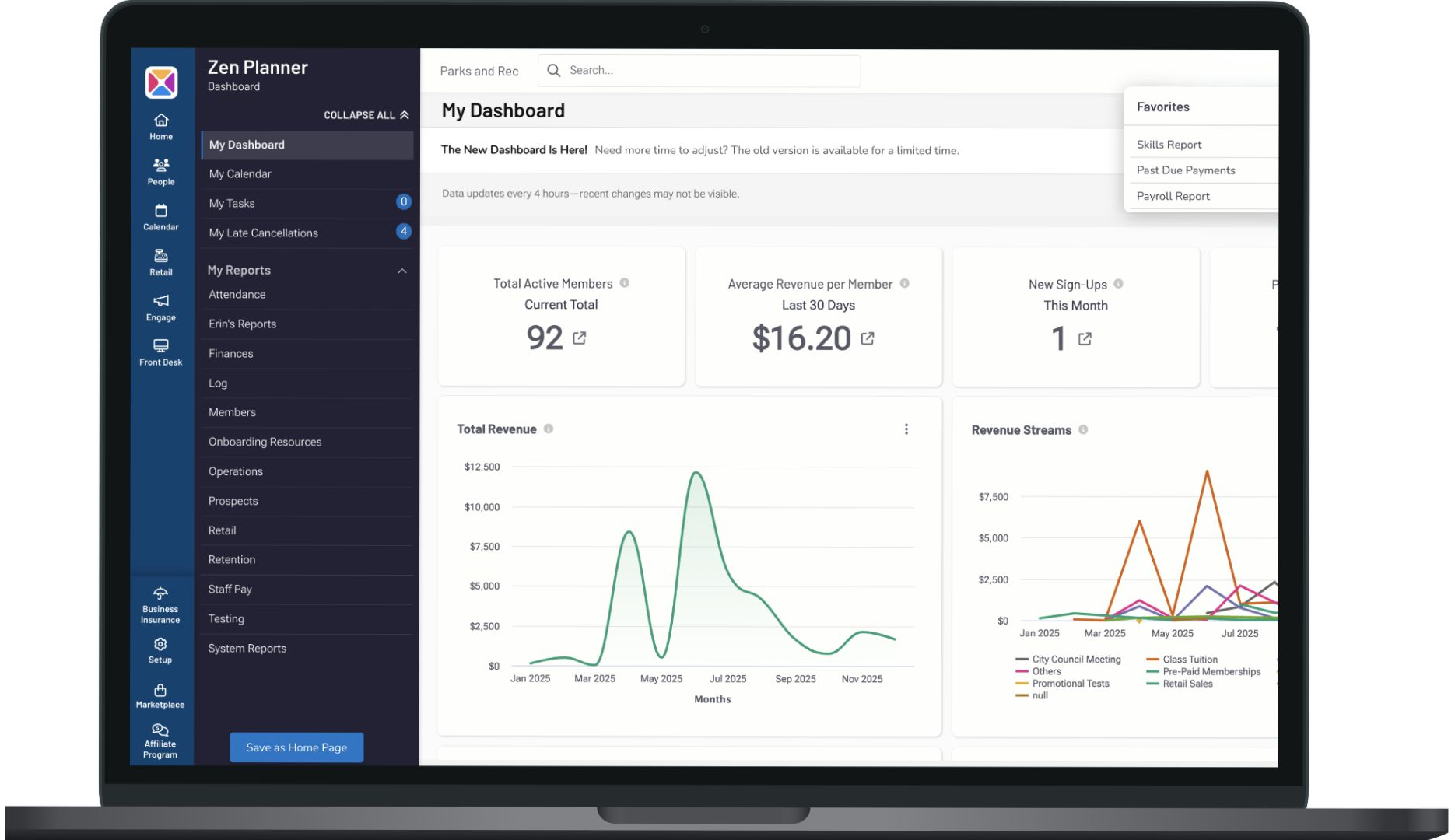
Attendance predicts conversion. Inside your CrossFit on-ramp program, monitor:
- Session attendance
- Completion rates
- Drop-off points
Athletes who attend 4 or more sessions are significantly more likely to convert into full memberships.
With the Daxko Zen Planner’s gym management software, you can create saved reports showing:
- Total leads
- Total attendees
- Completion percentage
- Membership conversions
This data helps you refine coaching, scheduling, and messaging.
Close the loop with a structured transition
Session 6 should not end without direction. Create a simple next step:
- Congratulations
- Personalized recommendation
- Clear membership option
- Option to book a short goal-setting conversation
Automate this email the day after the final session.
A strong CrossFit on-ramp program does not just introduce athletes to movement. It introduces them to your community and your long-term coaching system.
Why this model increases retention
When beginners experience:
- Structured CrossFit fundamentals
- Coach consistency
- Early success
- Clear communication
They feel capable this way. And when they feel capable, they stay.
A well-run CrossFit beginner program reduces early churn and increases average member lifespan.
With integrated CrossFit gym management software, you remove administrative friction so your team can focus on coaching instead of chasing paperwork.
Ready to build a CrossFit on-ramp program?
For CrossFit gym owners focused on retention and sustainable growth, building a structured CrossFit on-ramp program is one of the highest-leverage decisions you can make.
And when paired with Daxko Zen Planner’s smart gym management software, it becomes scalable without increasing administrative workload.
Book a live demo to explore how Daxko Zen Planner helps CrossFit gym owners manage leads, automate follow-ups, and track beginner retention in one connected system.
FAQs about building a CrossFit on-ramp program
1. What is a CrossFit on-ramp program?
A CrossFit on-ramp program is a structured beginner pathway that teaches foundational movements, gym norms, and pacing before new athletes join regular group classes. It focuses on CrossFit fundamentals, safety, and confidence so beginners can transition smoothly into ongoing membership.
2. How long should a CrossFit beginner program last?
Most successful CrossFit beginner programs run for 2 to 4 weeks. A 2-week cohort model with 6 total sessions works well because it feels achievable while still building skill confidence. The key is consistent coaching and clear progression rather than duration alone.
3. Do CrossFit gyms still need on-ramp programs?
Yes. Even though CrossFit is scalable, beginners often feel intimidated without structured entry. A CrossFit on-ramp program reduces early churn, improves retention, and increases conversion rates. It also helps gym owners standardize onboarding and measure performance using Crossfit gym management software.
4. How do I track conversions from my CrossFit on-ramp program?
You should track:
- Total leads
- Total attendees
- Completion rate
- Membership conversions
Using gym management software allows you to automate lead capture, tag beginner cohorts, and generate reports showing conversion percentages. This makes it easier to refine your process each quarter.
5. What should be included in a CrossFit fundamentals session?
Each session should include:
- Movement instruction and mechanics
- Scalable variations
- Controlled conditioning
- Gym etiquette and safety
- A short debrief and next-step reinforcement
The goal is not intensity. The goal is confidence and competence.
About the Author: Mike Wuest