Guide to PPC advertising for fitness businesses

A practical, step-by-step handbook for gyms and boutique studios
PPC or pay-per-click is a type of advertising that lets you bid for ad placement on search engines. You only pay when someone clicks on your ad, making it one of the most measurable and cost-effective marketing channels.
This guide focuses on how to use pay-per-click (PPC) advertising, specifically Google Ads, to attract qualified prospects, boost class signups, and grow memberships.
While SEO lays the foundation for long-term visibility, this PPC guide gives you a controlled, measurable way to be present when people are actively looking and turn clicks into members.
Benefits of PPC advertising for fitness businesses
PPC offers several advantages over many traditional marketing channels — especially for local/high-intent businesses like gyms and studios:
- Instant visibility: You can launch a campaign and see leads by the afternoon rather than waiting months for SEO to build traction.
- Budget control: You determine your spend (daily or monthly) and can scale up or stop as needed.
- Local precision: Target by ZIP code, radius, city or region—so you reach people within your actual service area.
- Audience intent: PPC lets you reach people actively searching for fitness solutions ("free intro class", "gym near [city]"), which means higher purchase likelihood. Research finds that users who click on PPC ads are 50% more likely to make a purchase than those who arrive via organic search.
- Action tracking: You can directly measure sign-ups, phone calls or form fills and optimize based on real-world data.
- Increased traffic volume: PPC has been measured to generate an average of 5 organic search clicks for a business for every one click on their paid ads.
- Strong ROI: Google has observed that businesses see about $2 in revenue for every $1 spent on PPC (i.e., ~200% return) according to recent aggregated stats.
Getting started with Google Ads
If you're new to PPC advertising for fitness businesses, it's best to start in Google Ads with a "Search Network Only" campaign targeting your local area.
- Set up (or log into) your Google Ads account and link Analytics + any call-tracking or CRM tools.
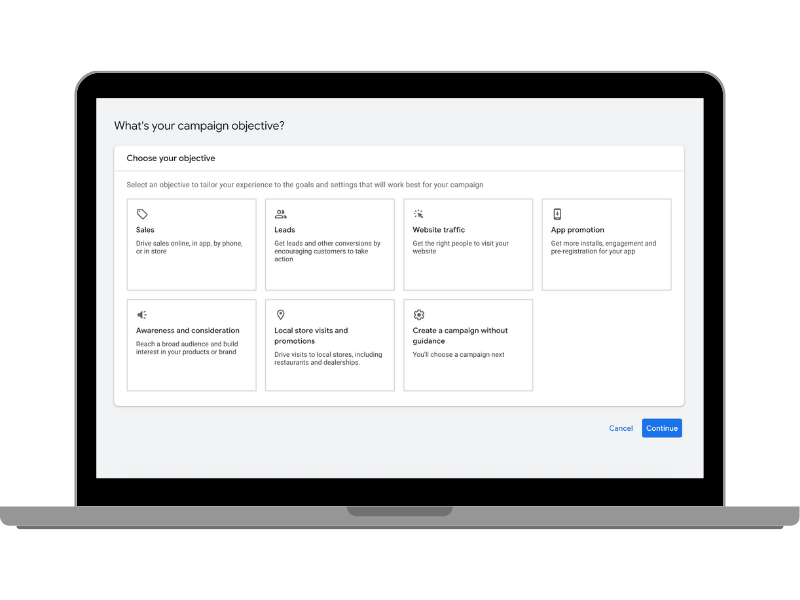
- Choose your campaign goal (e.g., Leads, Website traffic, or Phone calls).
- Select target locations and radius (for example: your city + a 10-mile radius).
- Set your daily/monthly budget (see next section).
- Build ad groups, keywords, ads and add extensions (covered below).
- Set conversion tracking so you can measure which clicks turn into trial sign-ups or memberships.
- Launch the campaign and monitor performance—optimize weekly.
Ad copy tips that attract qualified leads
When writing ads for gyms/studios, your goal is to speak to intent and clarity. Here's a structure + best practices:
Ad Structure (Search Network):
- Headline (up to ~30 characters each in Google Ads; you'll often set multiple headlines)
- Description lines (up to ~90 characters each; write clear value + CTA)
- Display URL (your domain + readable extension, e.g., "YourGym.com/FreeIntro")
- Final URL (landing page to send traffic to)
Best practices from the guide:
- Include your fitness category + location in at least one headline (e.g., "CrossFit Denver – Free Intro").
- Write a headline version with your business name for brand recognition.
- Description line 1: address the audience and their goal (e.g., "Get stronger. Join our group classes in Denver.")
- Description line 2: clear CTA (e.g., "Claim your free 7-day pass today").
- Capitalize first letter of each Word for readability, but ensure grammar still flows.
- Make each description line a standalone sentence (this helps if Google wraps abstractly).
- Test multiple versions of ad copy (see A/B testing section below).
Setting realistic monthly budgets
Your budget will depend on your market size, competition and your goals. A few guidelines for fitness businesses:
- For smaller cities or less competitive markets, consider at least $400/month to get enough data to evaluate performance.
- In larger, more competitive markets, you may need $600-$800/month+ to meaningfully test and optimize.
- Be sure this budget allows your ads to generate enough impressions/clicks to draw conclusions—too small of a budget often won't provide useful data.
- Monitor your cost-per-lead (CPL) and cost-per-acquisition (CPA). Once you see a positive return, scale up the budget.
Why focus on Google Ads for PPC
Google Ads dominates the search engine market share and captures the majority of intent-driven queries—meaning people searching are often in decision mode (e.g., "gym membership near me", "fitness studio free trial"). In fact, one resource states that for paid search ads, the top three sponsored listings receive 54.4% of all clicks on Google's search results.
Because gyms are typically local and high-intent, the Search Network on Google is a strong first step. Once you've mastered that, you can later expand into Bing, display or social PPC.
Understand PPC account structure
A well-organized account structure helps your campaigns run more efficiently and gives you greater control. Here's the hierarchical structure you should follow:
- Campaigns: Define budget, targeting (location, device, networks) and goal (e.g., Leads).
- Ad Groups: Contain a tightly themed set of keywords and the ads that serve them (e.g., "CrossFit Beginners [City]", "Yoga Studio Intro [City]").
- Keywords: The actual search terms (or match types) you bid on—these determine when your ads trigger.
Maintaining this structure ensures relevancy between searcher intent → keyword → ad copy → landing page. That alignment improves performance and lowers cost.
Building a smart keyword list
Prioritize terms prospective new members search, not terms used by existing members. You pay for every click—choose keywords that bring prospects.
Good keywords that attract new members:
- “CrossFit gym [city]”
- “fitness studio free trial [city]”
- “beginner yoga class [city]”
Avoid keywords that are primarily for existing members:
- “[gym name] member login”
- “schedule [gym name]”
- “[gym name] WOD workout”
Use match types to manage reach
Broad match
- Symbol: No symbol associated with broad match
- Example keyword: Dallas gym memberships
- Potential search results matched to the keyword:
- “Best fitness studios in uptown Dallas”
- “Cheap gym passes in Dallas”
- “Fitness classes in the Dallas area”
Phrase match
- Symbol: Quotations around the keyword, “keyword”
- Example keyword: “Dallas gym memberships”
- Potential search results matched to the keyword:
- “Cheap gym memberships in Dallas”
- “Gym memberships in Dallas for beginners”
Exact match
- Symbol: Brackets around the keyword, [keyword]
- Example keyword: [Dallas gym memberships]
- Potential search results matched to the keyword:
- “Dallas gym memberships”
- Dallas TX gym memberships”
A healthy campaign mixes broad, phrase, and exact to balance volume and relevance.
Reduce waste with negative keywords
Negative keywords stop your ads from triggering on irrelevant queries—critical for preserving budget. For gyms, typical negatives might include:
- Classes you don’t offer: If you teach taekwondo only, add negative keywords for BJJ, judo, MMA, etc.
- General supplies: Add negatives for apparel and gear (e.g., “shoes,” “clothes,” “wod journal”) if you don’t want retail clicks.
- Other cities/states: Exclude locations outside your drive-time radius or duplicate city names in other states.
- Member searches: Exclude terms like “login” or “wod” to avoid paying for current member visits.
- “Free” and price shoppers: If you don’t offer free classes, negative match “free.” For premium pricing, exclude “cheap,” “low cost,” etc.
Tip: Apply negatives at the campaign level, and use exact-match negative keywords (e.g., [free gym trial]) for greater precision.
Organize keywords into tight ad groups
For best performance you want each ad group to include 3-15 closely related keywords. This helps your ad copy match the searcher’s intent and boosts relevancy (improving Quality Score and reducing cost).
Example structure:
Ad Group: “CrossFit Beginners [City]”
Keywords: “crossfit gym [city]”, “crossfit intro class [city]”, “crossfit beginners [city]”
Ad Group: “Yoga Studio [City]”
Keywords: “yoga studio [city]”, “beginner yoga class [city]”, “free yoga intro [city]”
When themes are tight, you can write more targeted ad copy and send visitors to landing pages that speak specifically to their interest.
What is Quality Score (and why it matters)
Quality Score is Google Ads’ 1–10 rating of how relevant and helpful your ad is to the person searching.
It’s based on three key factors:
- Expected click-through rate (CTR): How likely someone is to click your ad when it appears.
- Ad relevance: How closely your ad text matches the searcher’s intent and keywords.
- Landing page experience: How useful and trustworthy your webpage is once someone clicks.
A higher Quality Score means Google views your ad as more relevant—which can earn you lower cost-per-clicks and better ad positions without raising your bid.
For fitness businesses, that means your “Dallas gym memberships” ad could show above competitors even if you’re spending less, simply because your ad copy and landing page align perfectly with what users are searching for.
Write enticing ads & A/B test
Each ad should reflect the keyword theme, your value proposition, and a strong call to action (CTA). Then you should test variations to optimize performance.
Best practices:
- Headline: Include the keyword theme in at least one headline (and optionally your brand).
- Description line 1: Speak to the audience and value (e.g., “Join the city’s best beginner-friendly CrossFit classes.”)
- Description line 2: Include a strong CTA and maybe an offer (e.g., “Book your free intro today!”).
- Display URL: Use a readable path extension that reinforces the theme (e.g., /FreeIntro).
- Create four ads per ad group: two different concepts, then two small variants (change headline, featured keyword, or CTA).
- Run for ~1 month (or until you have meaningful sample size), pick the best performers, then iterate.
Testing plan: Launch four ads per ad group—two distinct concepts, each with one small variant (headline, featured keyword, or CTA). Let tests run for about a month, pick winners, and iterate.
Structure campaigns around goals
You can organize campaigns in ways that align with your business model:
- By class type (e.g., CrossFit, weightlifting, FIT classes)
- By demographics (e.g., adults, kids, teens)
- By location (if you have multiple studios and want separate budgets + local targeting)
- By goal/type (Free trial sign-ups vs membership conversions vs retention offers)
Key campaign settings to review
- Campaign type: Choose Search Network Only when starting out.
- Devices: If your site isn’t mobile-optimized yet, decrease mobile bids until you can optimize.
- Locations: Use zip codes/cities and exclusions for precision.
- Budget: Ensure your budget supports enough traffic to learn; if the daily budget is too low, you’ll get little data and slower optimization.
Track the right performance metrics
To succeed with PPC advertising for fitness businesses, here’s what to track:
- Clicks & impressions: Gauge how visible and engaging your ads are.
- Clickthrough rate (CTR): Clicks ÷ impressions. ~2% is a strong benchmark, but it can vary by market (branded terms tend to be higher).
- Cost & average CPC (cost-per-click): Monitor efficiency—if CPC is too high relative to your margin, you’ll struggle with ROI.
- Average position: While not as emphasized now by Google, higher ad positions often correlate with better performance—especially for local high-intent queries.
- Quality score (1–10): Google’s measure of keyword/ad/landing-page relevancy. Higher scores lower your costs and improve results.
- Conversions: Define and track what “success” means for you (free trial sign-up, phone call, membership form, etc.).
- Conversion rate: Clicks → desired action; helps determine how effective your landing page or offer is.
If your ad impressions are high but clicks are low, refine match types and ad copy. If your ad metrics look good but your site engagement is poor, send traffic to a better-aligned landing page.
Boost results with ad assets
Formerly known as “ad extensions”, Google’s ad assets add visibility, increase real estate on the search results page, and often improve performance. For gyms and studios, try:
- Sitelink assets: Link to high-value pages like pricing, schedule, about, etc. Ads with sitelinks that improve their ad strength can see ~15% more conversions on average.
- Location assets: Show your address, phone, and map marker; often yield a ~10% CTR lift and support in-person visits.
- Call assets: Add your phone number and enable click-to-call on mobile.
- Callout assets: Highlight benefits or limited-time offers in short 25-character snippets.

Prove ROI by tracking conversions
Measure what happens after the click. Examples of valuable actions:
- Request-info form submissions
- eBook/guide downloads
- Free class sign-ups
- Phone calls from ads
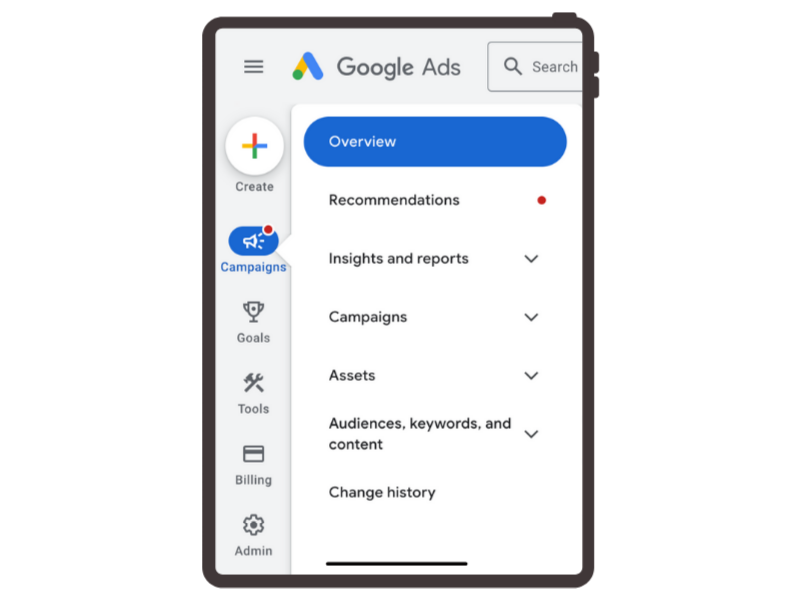
Go to Goals → Conversions → Summary → + Create conversion action → Choose from the selections under "What's important for you to measure?" → + Add conversion actions → Choose from your data source to track the conversion → Define the conversion event → Install the code on your thank-you page or set up call-tracking (as needed).
Then go to Columns → Modify columns → Conversions in your Google Ads views so you can analyze performance by campaign, ad group, ad, and keyword.
This tracking lets you tie ad spend to actual revenue or membership acquisition, making optimization decisions clear and data-driven.

Go deeper with Google Analytics
Linking Google Ads with Google Analytics gives you a richer view of what happens after the click. For a gym/studio business map, watch:
- Audience → Geo → Location: Confirm traffic is coming from your service area.
- Acquisition: Sessions, new users, bounce rate, pages per session, average session duration, conversions by channel (paid vs organic).
- Behavior → Landing Pages: See which pages visitors land on, where they exit, and identify pages that need improvement.
- Conversions → Goals: Set meaningful goals like trial sign-up thank-you page. In Admin → Goals → +New → Destination: "/thank-you-trial".
Review these weekly to ensure your paid traffic is performing well and to catch any unexpected drop-offs or areas to improve.
Final checklist to launch your PPC campaigns
Here's a handy checklist to ensure your gym's PPC campaign is ready to go:
- Build tightly themed ad groups with 3-15 relevant keywords each.
- Add a robust list of negative keywords at the campaign level to prevent wasted spend.
- Write four ads per ad group and schedule monthly A/B tests (two concepts + two variants).
- Implement ad assets: sitelinks, location, call, callouts.
- Set up conversion tracking in Google Ads and goals in Google Analytics.
- Fund your budget at a level that allows meaningful testing (e.g., $400-$800/month depending on market).
- Launch at a time you can monitor (e.g., start of week) to spot any issues early.
- Review performance at least weekly for the first few months, then scale what works and pause what doesn't.
About Zen Planner
The all-in-one software of Zen Planner gives you everything you need to run and grow your fitness business—integrated payments, scheduling, membership management, email, and website templates—plus free onboarding with a personal coach. Our team of fitness enthusiasts pairs software expertise with community know-how to help your business thrive, reflected in our 99% customer satisfaction score and strong customer referrals.
Ready to launch high-performing PPC campaigns?
Zen Planner's all-in-one platform gives you everything you need to attract, nurture, and retain members—from integrated websites and payment processing to automated lead follow-up.
Schedule a demo, and see how Zen Planner helps fitness businesses grow stronger every day.
About the Author: Mike Wuest