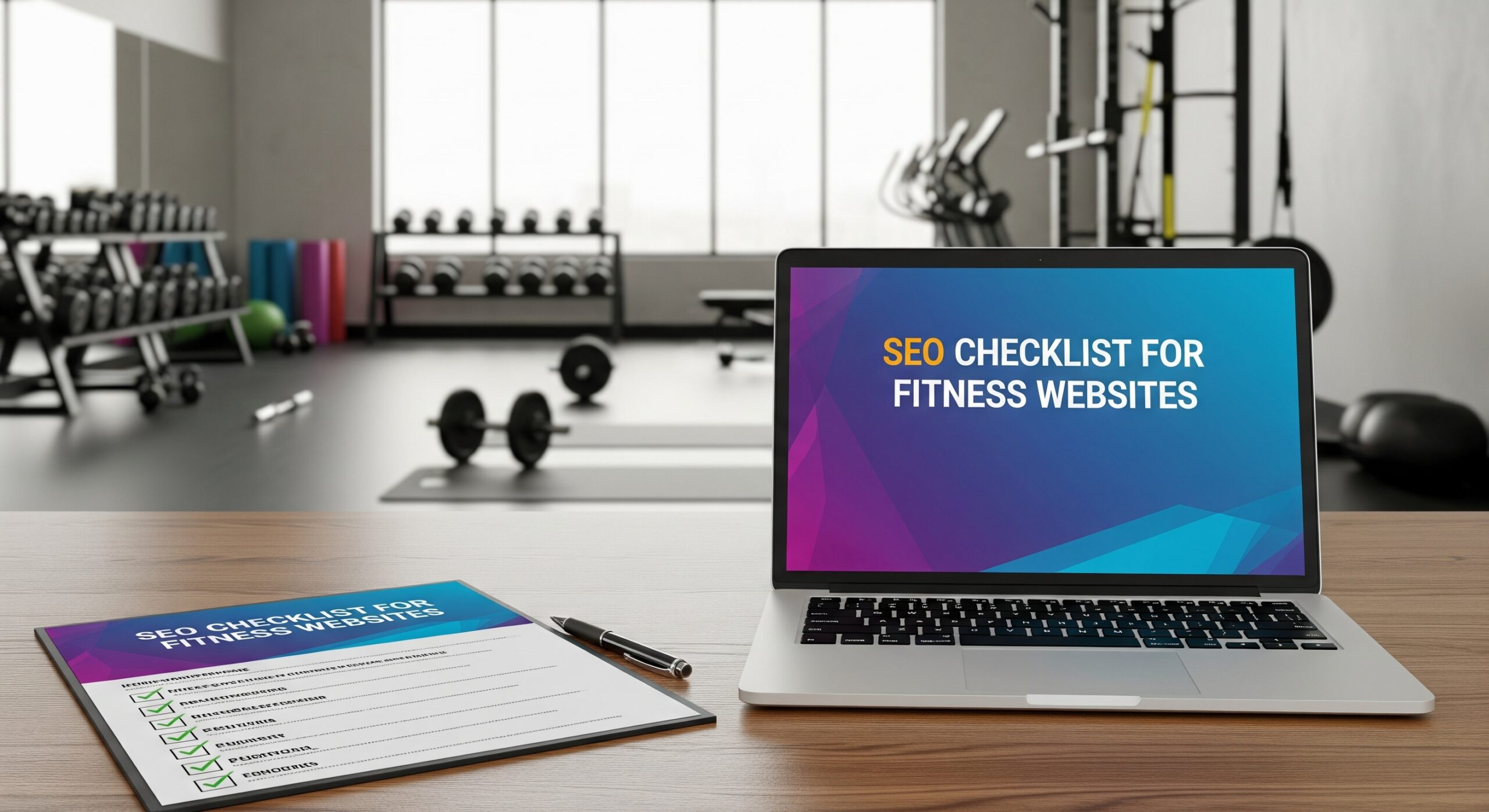
The ultimate SEO checklist for fitness studio owners
Most fitness studios rely on word-of-mouth and social media to bring in new members. Both matter — but neither replaces showing up when someone in your city searches for exactly what you offer.
That search happens thousands of times a day across every market, and the studios that appear at the top of those results have a significant and compounding advantage over those that don’t.
This checklist covers the fundamentals — on-page, technical, local, and content — that give your studio a real shot at ranking for the searches that bring in paying members.
On-page SEO essentials
Target the right keywords for your market
Generic fitness keywords are dominated by national brands and review aggregators. Your opportunity is in specific, local intent — “HIIT classes in [city],” “martial arts for kids in [neighborhood],” “women’s CrossFit gym near [area].” These terms have lower competition and higher purchase intent than broad phrases, and the people searching them are actively looking for a studio to join.
Use Google Keyword Planner, Ubersuggest, or simply Google’s autocomplete to find what people in your area are actually typing. Build your page and content strategy around those terms — not the keywords you wish people were searching for.
Place keywords where they count
Once you have your target terms, use them in the places search engines weight most heavily: your page title, meta description, H1, first 100 words of body copy, and image alt text. One keyword per page, used naturally. Stuffing the same phrase into every sentence hurts more than it helps — search engines are sophisticated enough to recognize it, and readers will bounce.
Write meta tags that earn the click
Your title tag should stay under 60 characters and lead with your primary keyword. Your meta description — the snippet that appears under your link in search results — should be 155 to 160 characters, summarize the page’s value clearly, and end with a direct call to action.
Think of it as a one-line ad for your page. It doesn’t directly affect ranking, but it determines whether someone who sees your result actually clicks through.
Use a clear heading hierarchy
Search engines use heading structure to understand what a page is about and how its content is organized.
One H1 per page — your primary topic. H2s for major sections. H3s for supporting details within those sections. Beyond SEO, a clear heading structure makes your pages easier to read, which keeps visitors on the page longer — a signal search engines also factor into ranking.
Link between your own pages
Internal links do two things: they help search engines understand the relationship between your pages, and they keep visitors moving through your site instead of bouncing after one page.
Link from blog posts to relevant service pages, from class descriptions to your booking page, and from your homepage to your most important content. Must-track metrics for boutique fitness studios is an example of the kind of content that earns internal links naturally — useful, specific, and directly relevant to what studio operators are trying to accomplish.
Technical SEO fundamentals
Mobile optimization is non-negotiable
The majority of fitness-related searches happen on phones. If your website is slow to load, hard to navigate on a small screen, or missing click-to-call functionality, you’re losing prospective members before they’ve read a single word about your studio.
Use Google’s Mobile-Friendly Test to assess where you stand — then fix what it flags before investing time in any other SEO work.
Page speed affects both ranking and conversion
A slow site frustrates users and signals to search engines that the experience isn’t good. Compress your images before uploading them, enable browser caching, and minimize unnecessary code.
Run your site through Google PageSpeed Insights for a specific score and prioritized list of improvements. Page speed gains are often the highest-ROI technical fix a studio can make.
HTTPS is a baseline requirement
If your site URL still starts with “http” rather than “https,” Google is treating it as less trustworthy than secured sites — and flagging it to users as potentially unsafe. Contact your hosting provider about adding an SSL certificate. This is a one-time fix that removes a ranking penalty and improves visitor confidence at the same time.
Submit a sitemap to Google Search Console
A sitemap tells Google which pages exist on your site and how they’re structured. Most website platforms generate one automatically. Once generated, submit it through Google Search Console so Google can index your pages accurately and efficiently.
Local SEO — where fitness studios win or lose
Optimize your Google Business Profile
For a local fitness studio, your Google Business Profile is often more important than your website for driving foot traffic. Claim your profile if you haven’t already, and make sure every field is complete and current — business name, address, phone number, hours, class schedule, photos, and a link to your booking page.
Keep your NAP consistent everywhere
Your name, address, and phone number need to be identical across your website, Google Business Profile, Yelp, Facebook, and any other directory where your studio is listed. Inconsistencies — even minor ones like “St.” versus “Street” — create confusion for search engines and can suppress your local rankings.
Content that builds long-term SEO value
Publish blog content consistently
A blog signals to Google that your site is active and authoritative. More practically, it gives you the opportunity to rank for the informational searches your prospective members are making before they’re ready to book.
Each post is another indexed page and another entry point into your site from search. Turning gym data into growth with software for gym owners is an example of the type of content that attracts the right audience.
Add schema markup for fitness businesses
Schema markup is code that tells search engines specifically what type of business you are and what your pages contain. For fitness studios, the most relevant schema types are LocalBusiness, Event, and Review.
Implementing schema correctly can earn you rich results in search — star ratings, event details, and business information displayed directly in the search results page.
Unlock your fitness studio’s next level of growth
SEO is not a one-time project — it’s an ongoing discipline. The studios ranking consistently at the top of local search results aren’t doing anything exotic. They’ve covered the fundamentals, published useful content regularly, and kept their technical foundation clean.
That consistency compounds over time into a traffic and member acquisition advantage that paid advertising can’t replicate.
Pair a strong SEO foundation with centralized fitness business management software for scalable growth and you have both visibility and the infrastructure to convert that traffic into members and retain them.
Frequently asked questions (FAQs)
How long does SEO take to show results for a fitness studio?
Most studios see meaningful movement in local search rankings within three to six months of implementing the fundamentals consistently.
What’s the single most important SEO fix for a local fitness studio?
Optimizing your Google Business Profile. It has the most immediate impact on local visibility.
How often should a fitness studio publish blog content?
Once or twice a month is enough — consistency matters more than volume.
Do social media posts help with SEO?
Not directly, but they drive traffic and backlinks, which do influence rankings.
What is local SEO and why does it matter for gyms?
Local SEO helps your gym appear in location-based searches like “gym near me,” which directly impacts member acquisition.
Should fitness studios invest in paid search as well as SEO?
Yes. Paid search delivers immediate visibility, while SEO builds long-term traffic.
Ready to get your fitness studio found online?
Better rankings mean more members finding you before they find a competitor. Book a demo.
About the Author: Mike Wuest